ASM Model Display at KAFB USAF Anniversary History Symposium
ASM Model Display at Kirtland AFB USAF Anniversary History Symposium
By Mike Blohm
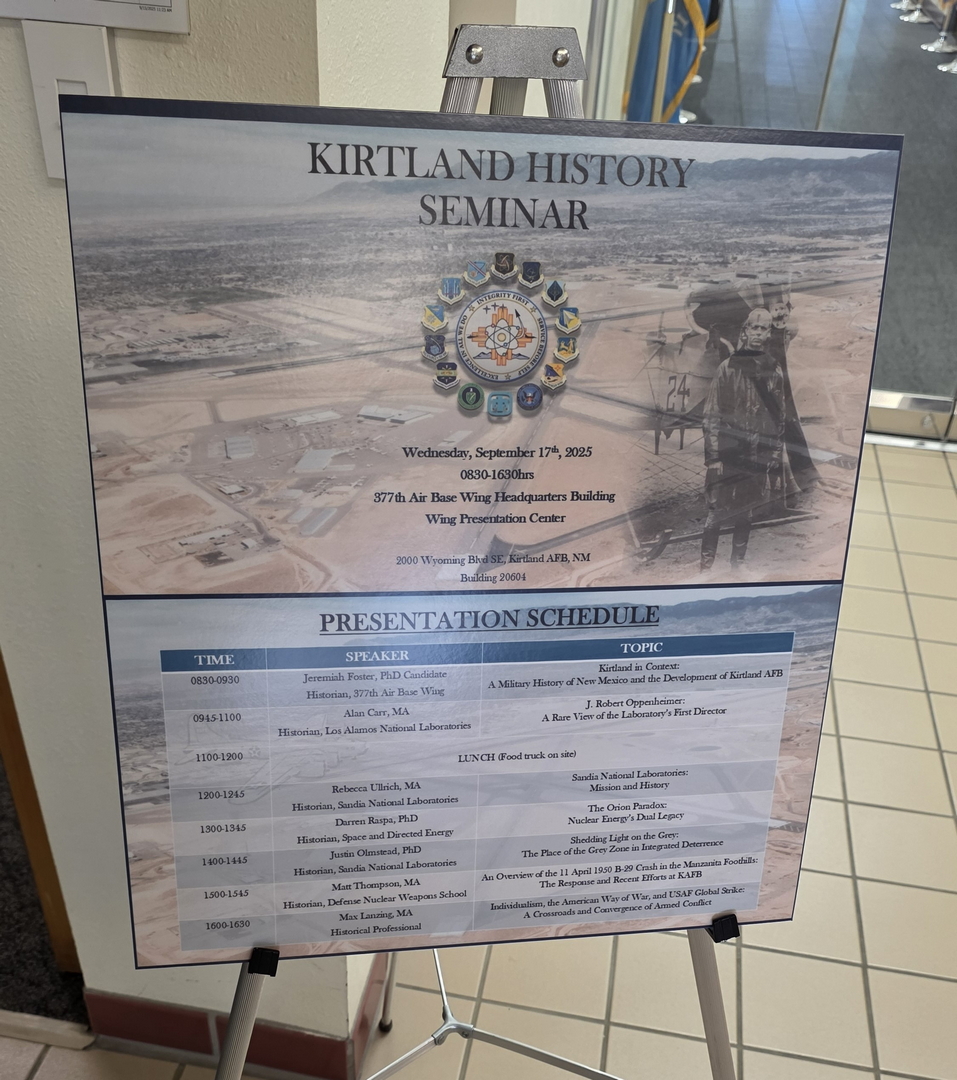
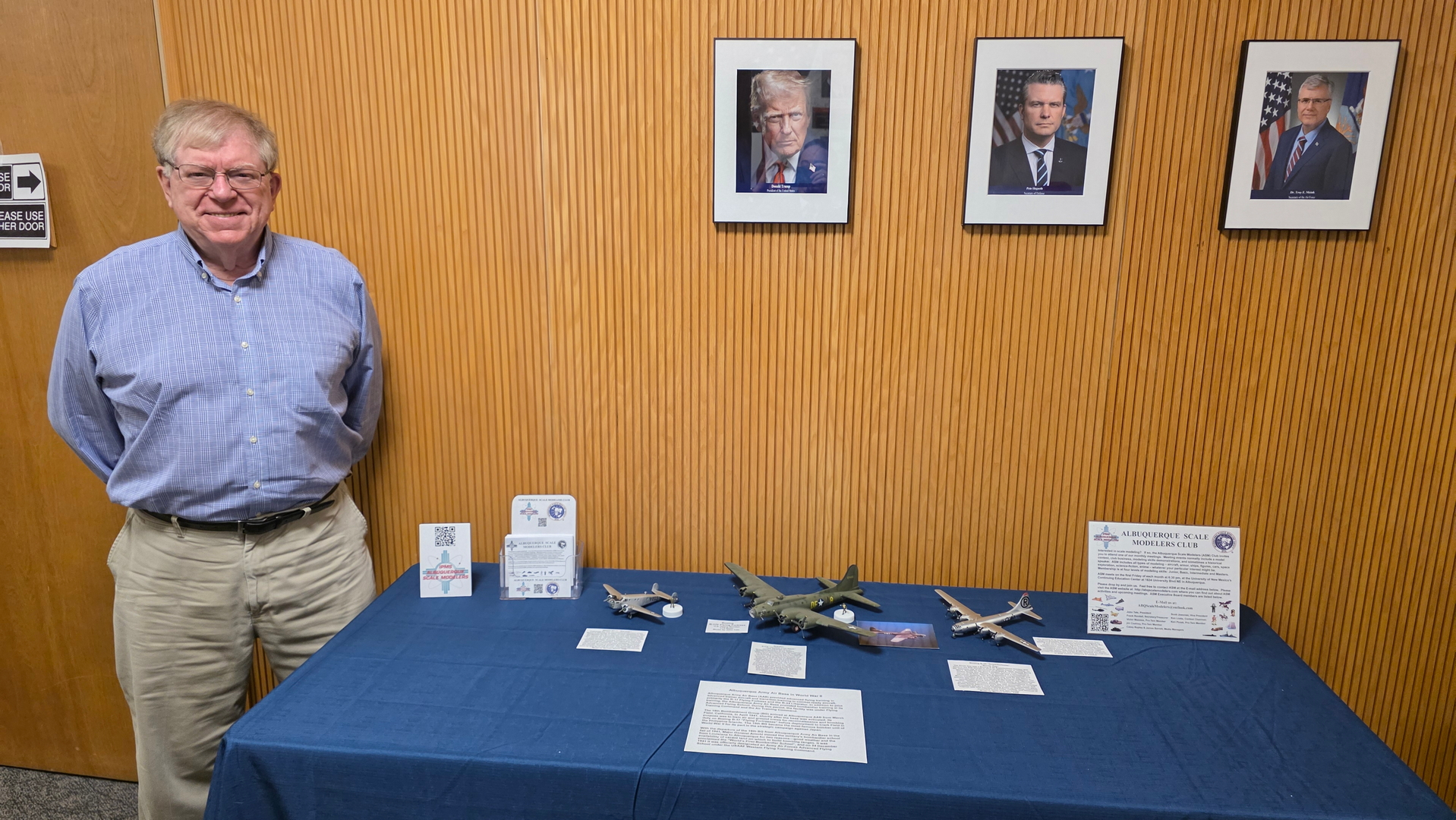
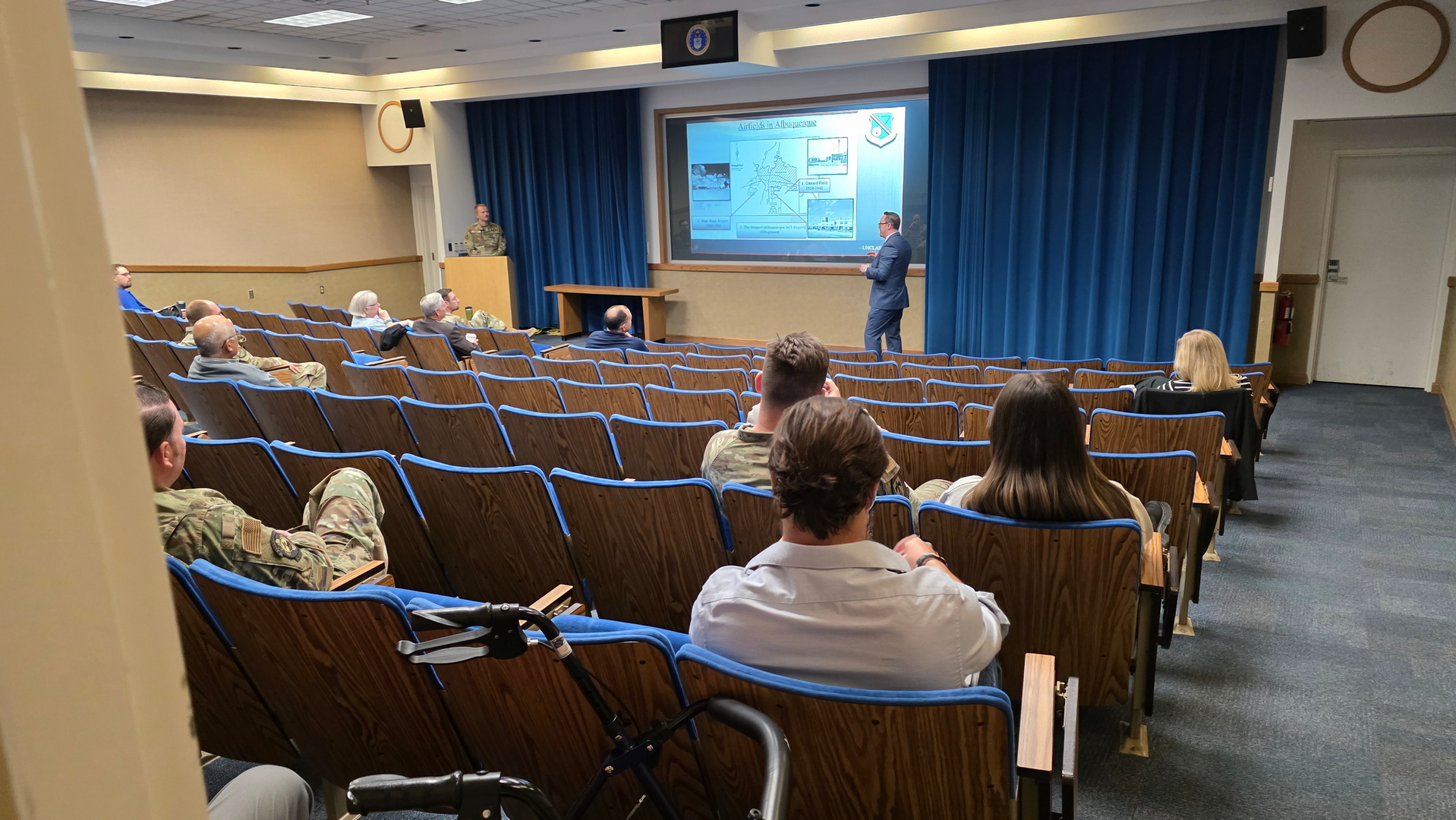
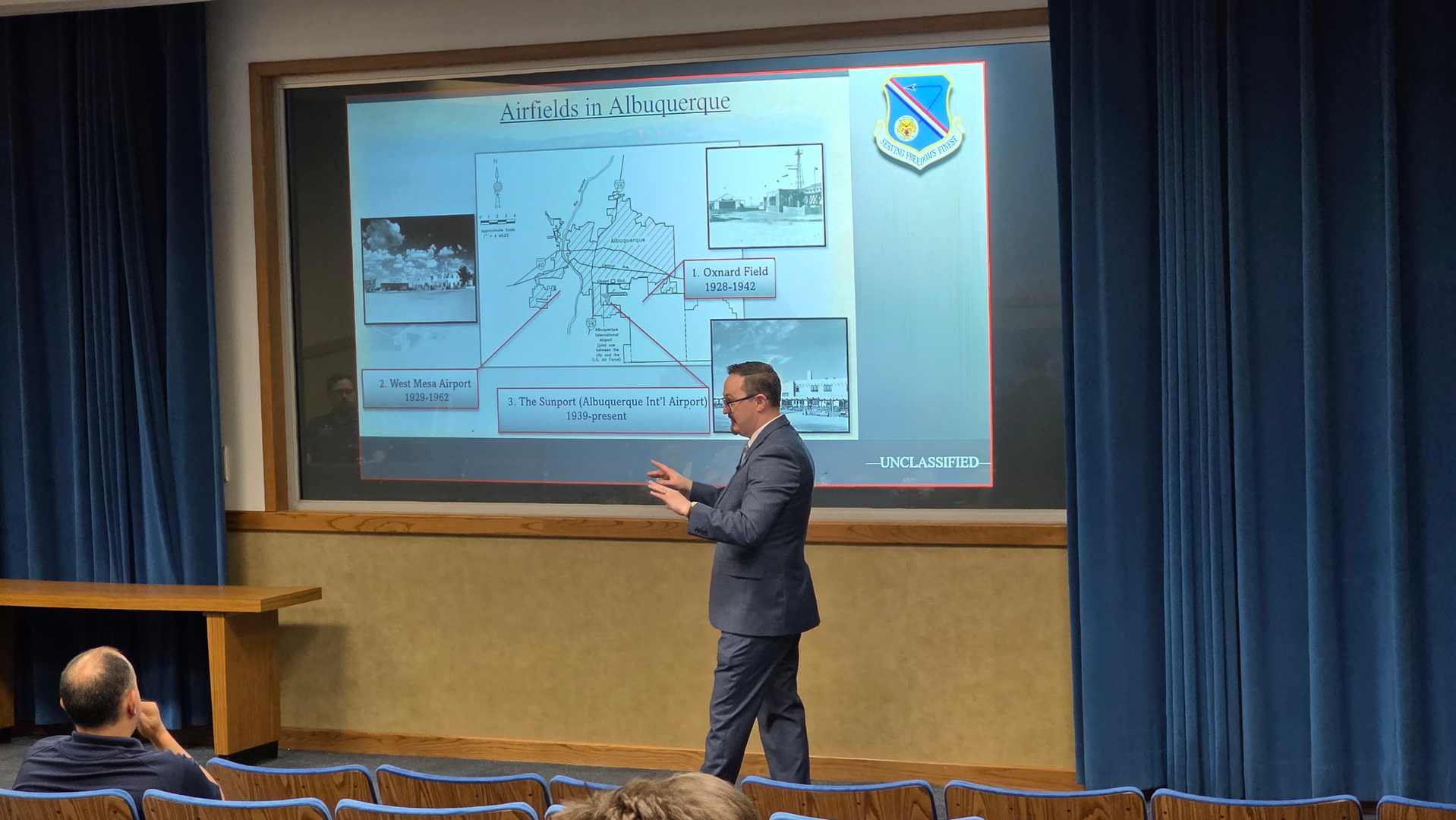
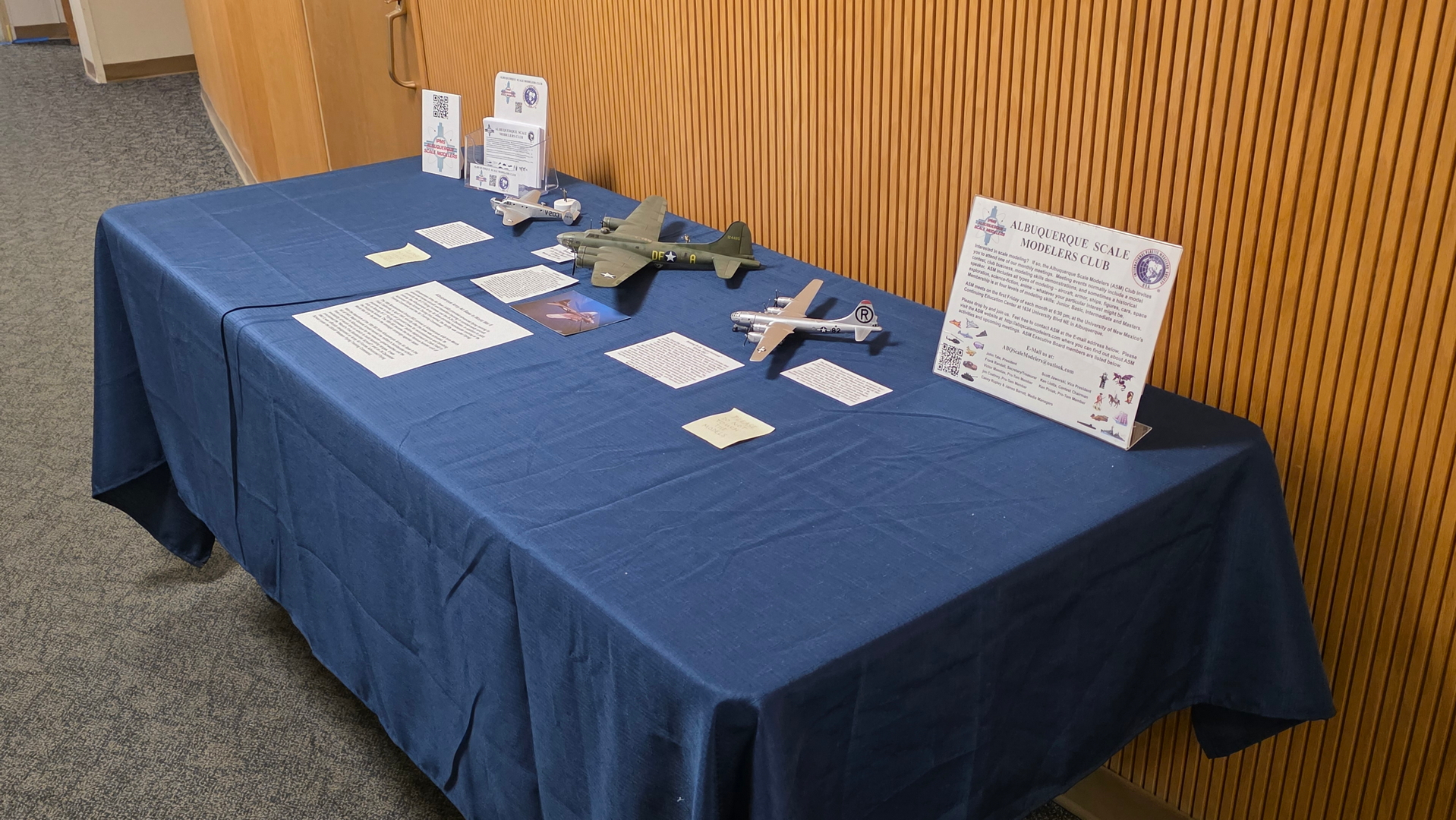
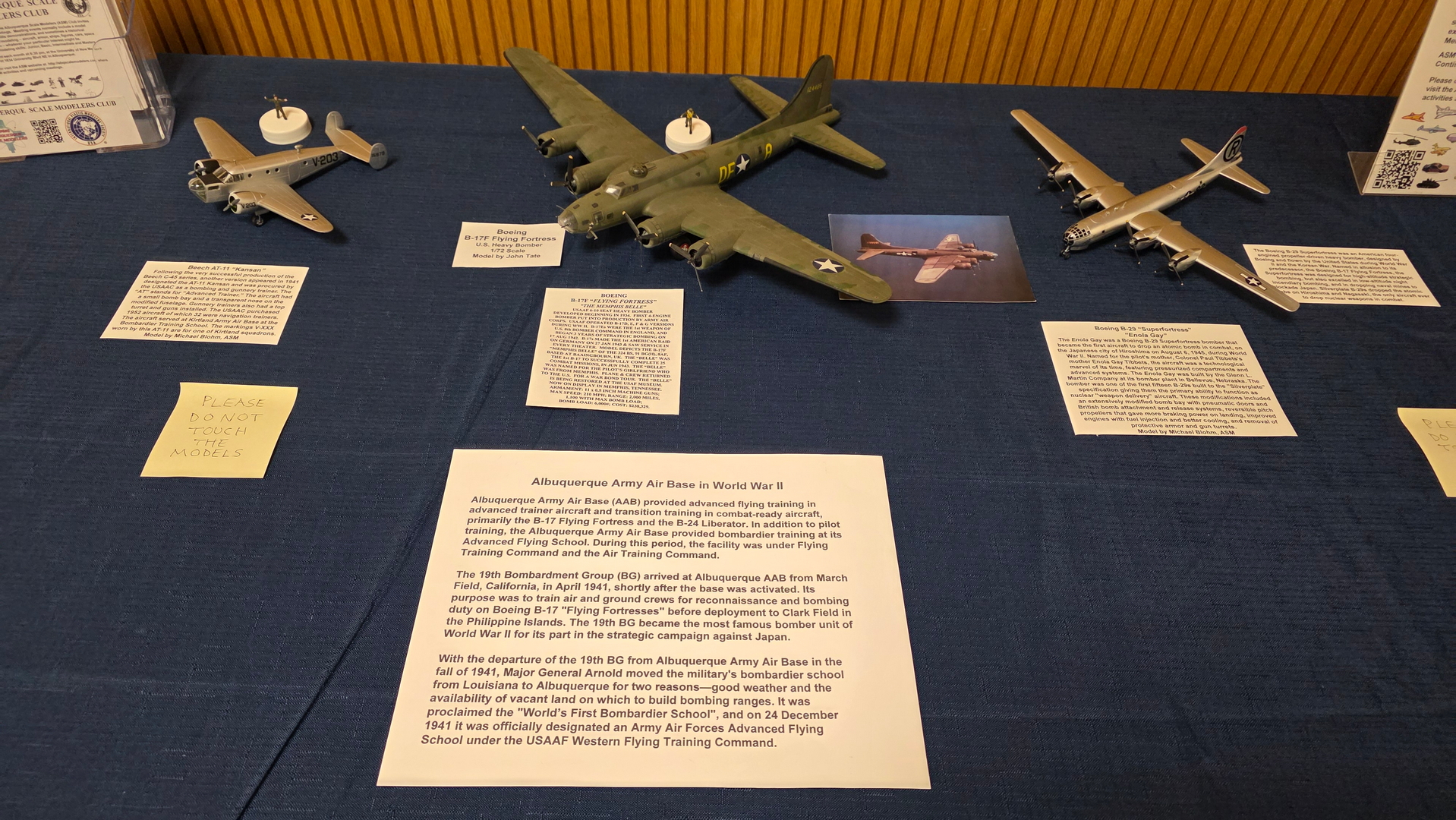
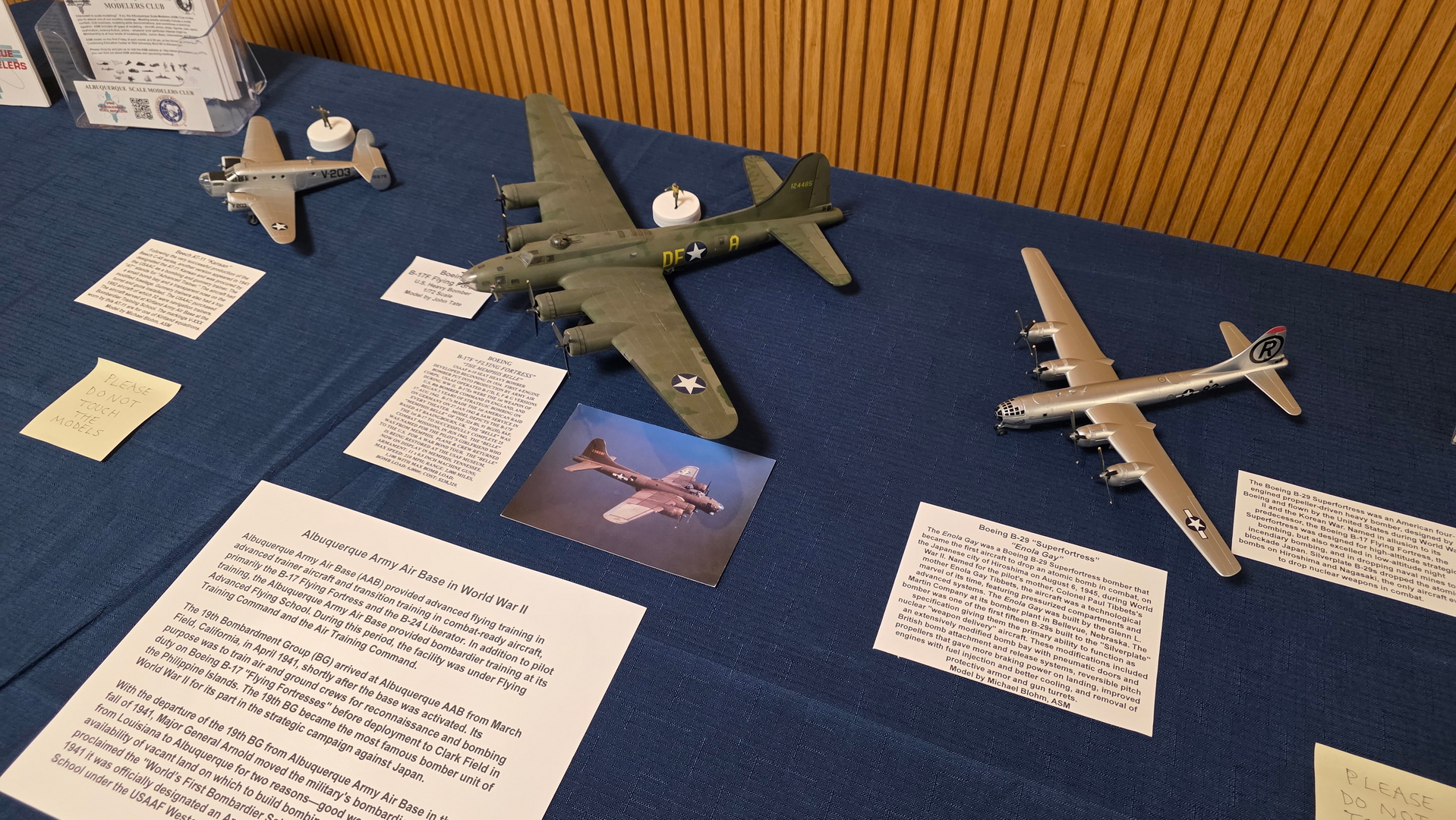
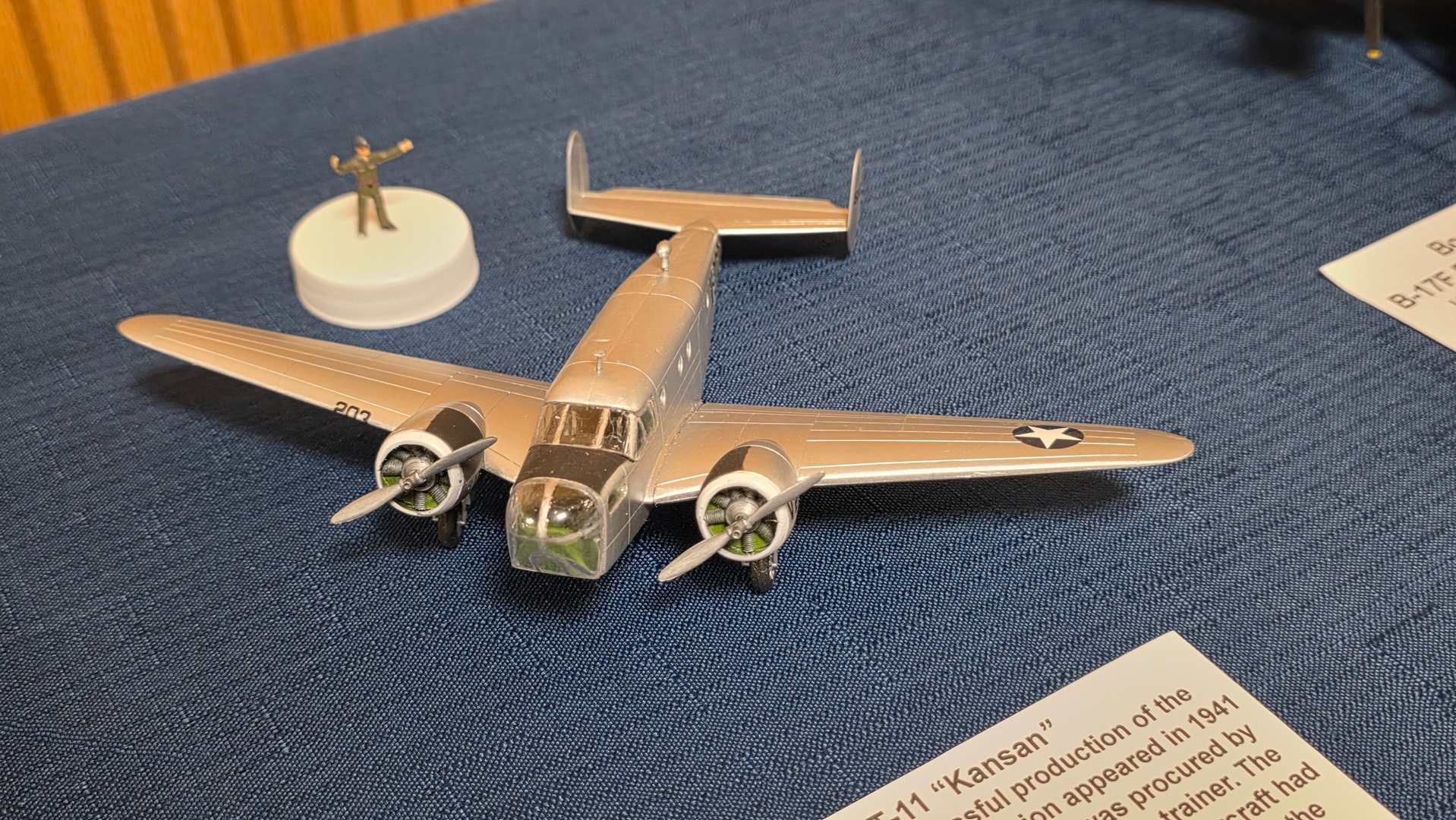
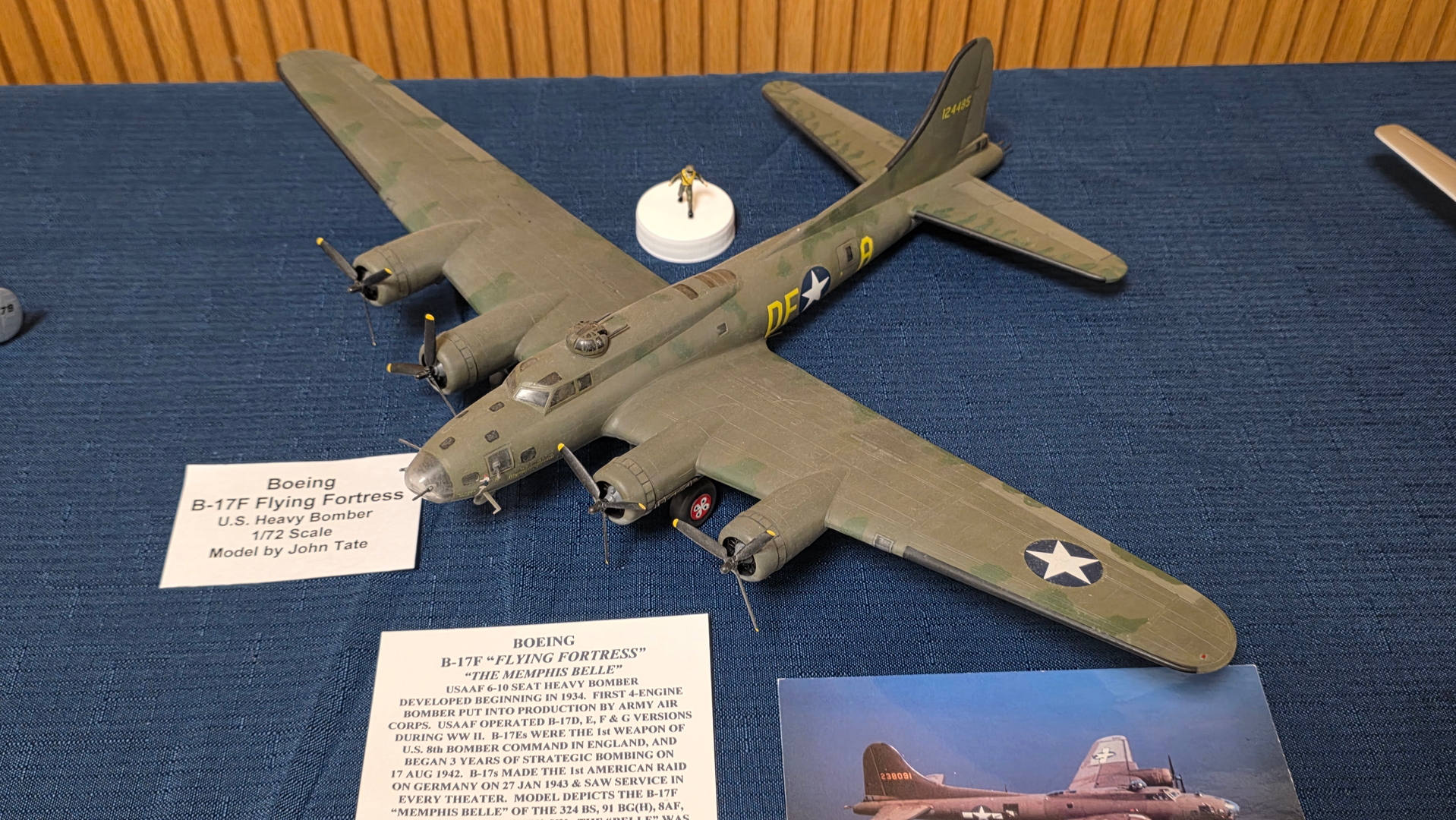
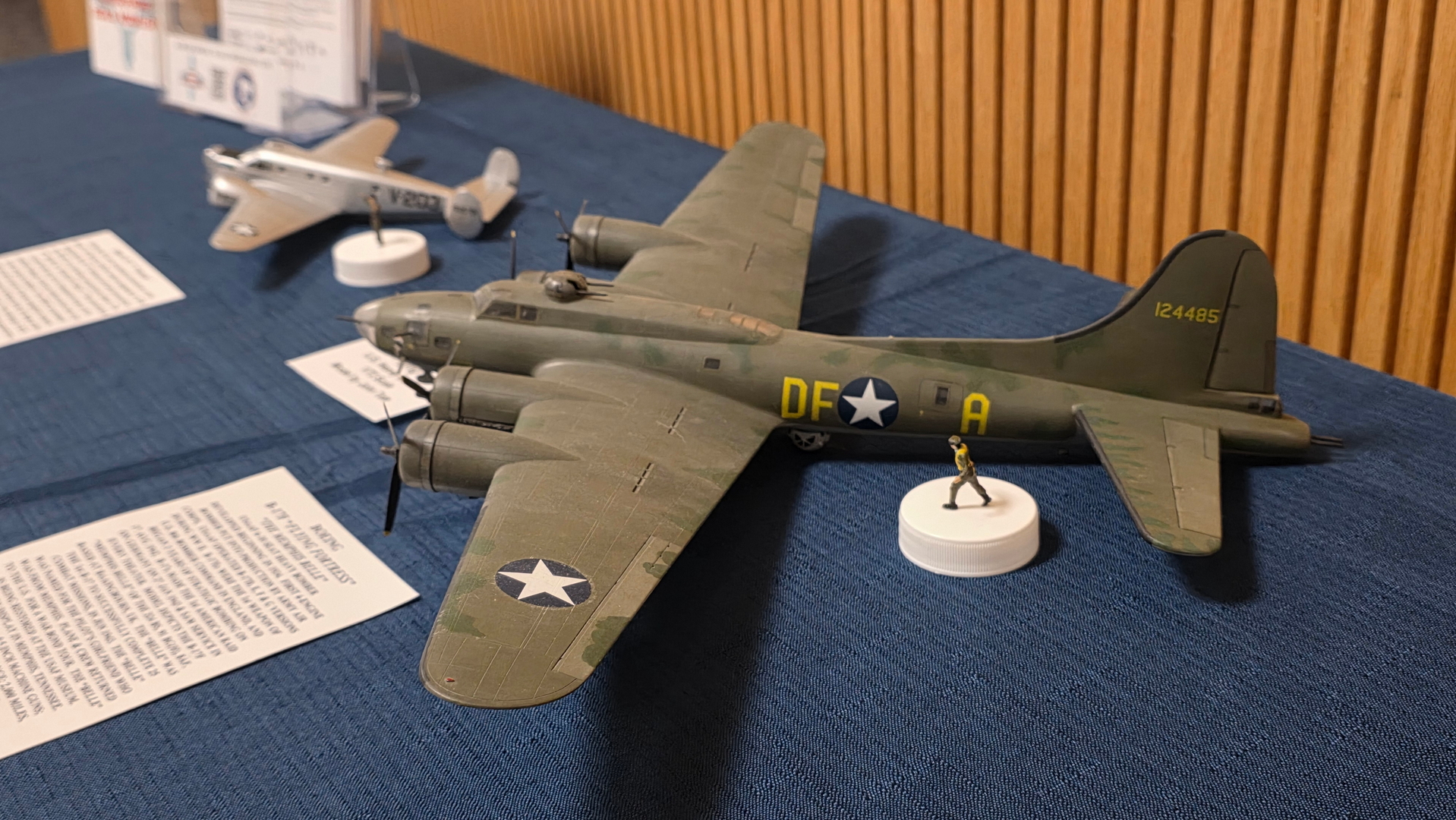
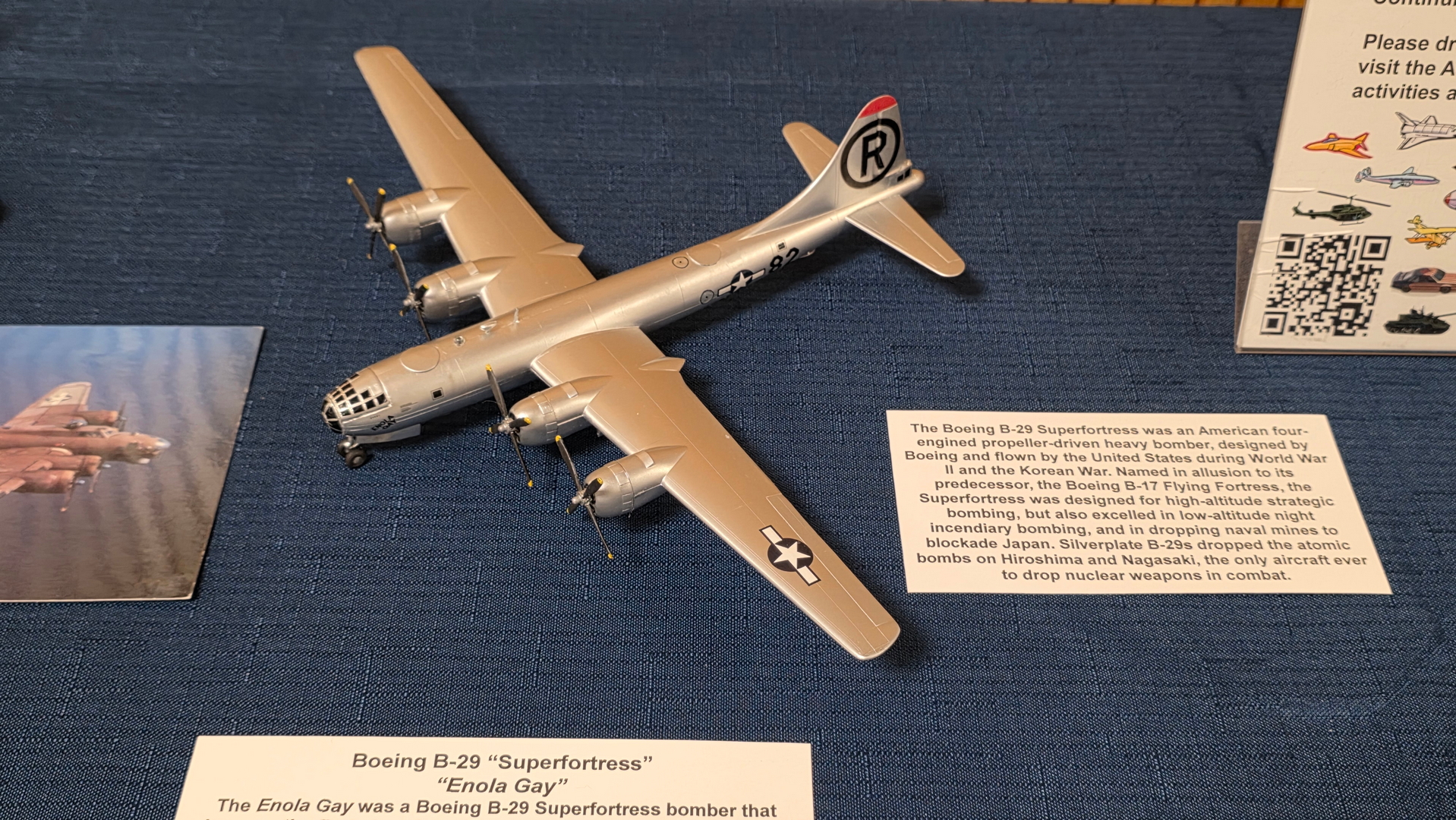
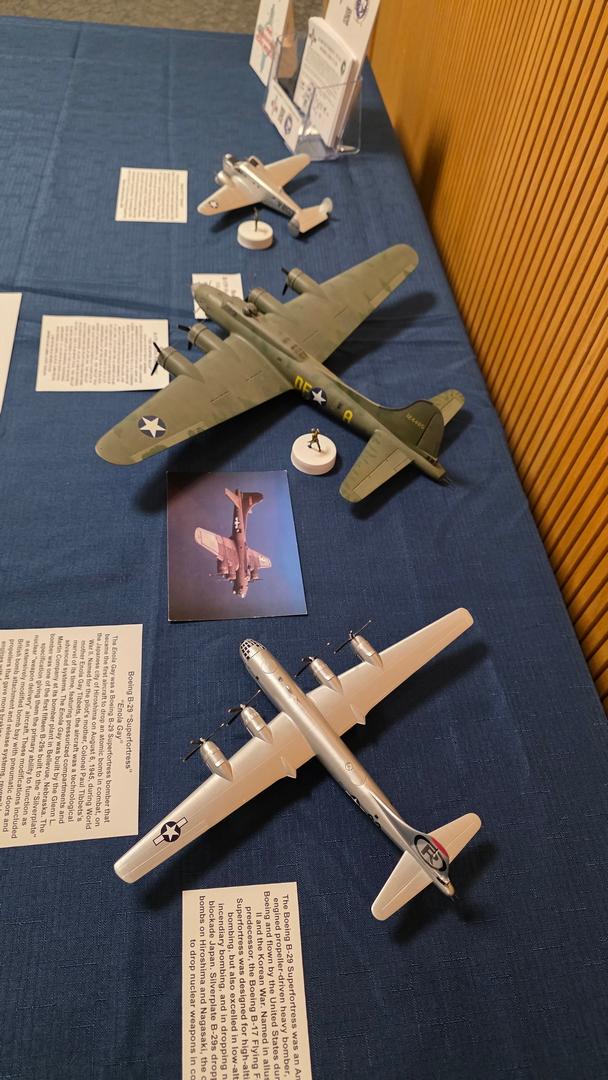
The Albuquerque Scale Modelers (ASM) supported the USAF Anniversary History Symposium held on September 17th at the 377 Air Base Wing Headquarters by providing a model display that covered the history of Kirtland Army Air Base during World War II. The display included a Beech AT-11 “Kansan” bombardier training aircraft and a Boeing B-17F “Flying Fortress” both in 1/72 scale, and a Boeing B-29 “Superfortress” in 1/144 scale. Signage was provided covering the history of the base in WW II and details on the aircraft types. The symposium was put together by Mr. Jeremiah Foster, the 377 Air Base Wing Historian, and it ran all day covering different topics. I initially contacted Mr. Foster about the 2025 Air Force Ball and during our conversations asked him if he would like a model display to support the symposium. He thought that was a good idea and chose these three aircraft types to display. I had already been intending to build the B‑29 and AT-11 to support future AF Ball displays, but this gave impetus to get them cranked out now. Quick-build articles on those models will be provided later. Pictures of the symposium and display are included below.
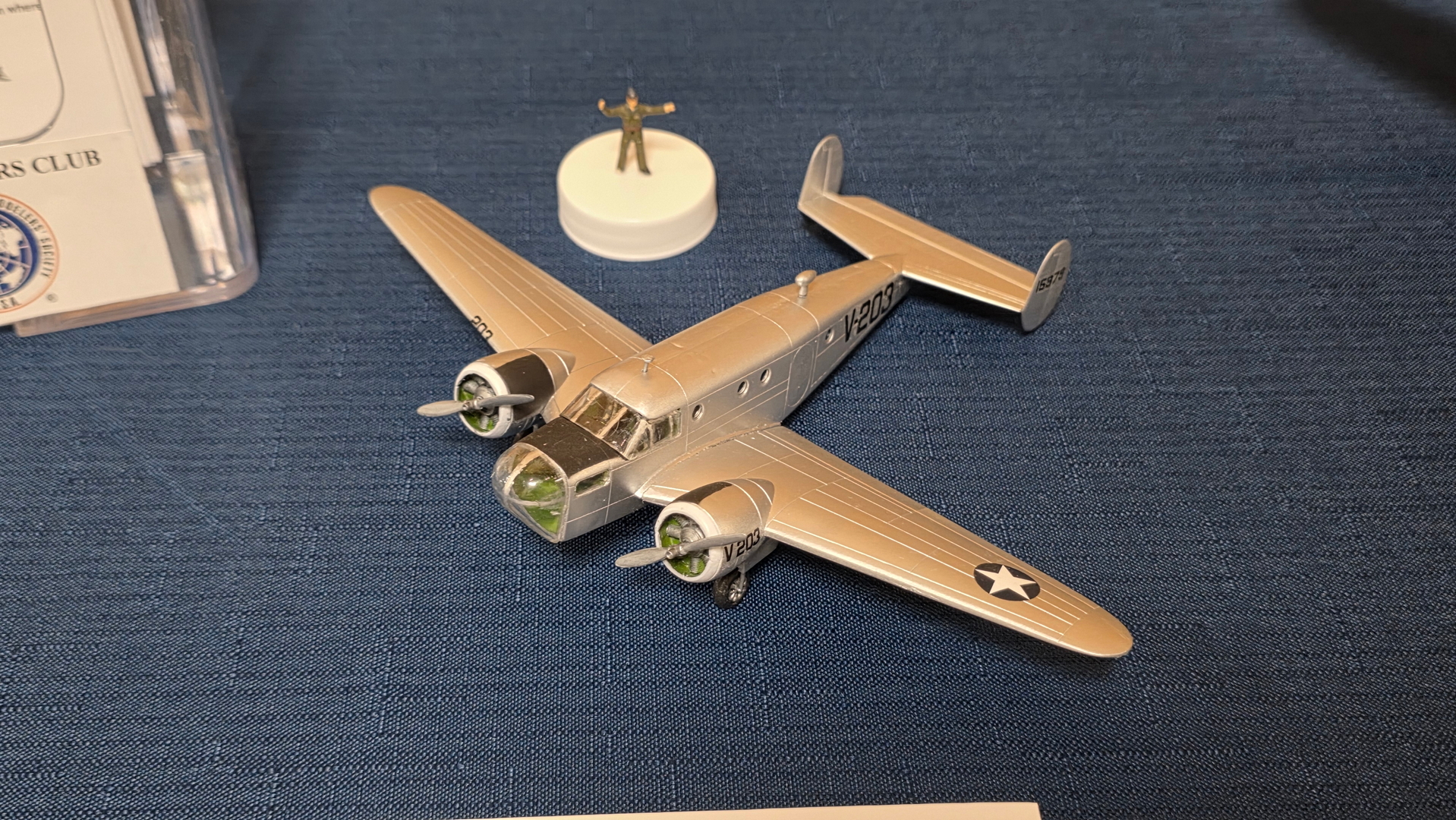
The AT-11 (AT for Advanced Trainer) model is in the scheme of one of the squadrons based at Kirtland Field during the war that had “V-200” numbered series, and was built by Mike Blohm. This is the Pioneer2 kit. Luckily the kit included decals that matched Kirtland. The AT-11 and the B-18 “Bolo” were used at the Bombardier School that was established in December 1941. Training included use of the top secret Norden bombsight. Unfortunately, the kit does not include any bombardier position or the bombsight. There were eventually 150 AT‑11s assigned to the base. The B-18s were used due to a shortage of B-17s.
The B‑17F model is in the scheme of the “Memphis Belle” and was built by John Tate to support our USAF 50th Anniversary displays at Kirtland AFB back in 1997. This famed B-17F became the first heavy bomber to return to the U.S. after flying 25 missions over Europe, and represents B-17 use at Kirtland. The 19th Bombardment Group with B-17s trained at Kirtland in mid-1941 before deploying to the Pacific. Kirtland Field also served as a pilot transition school for both the B-17 and the B-24 “Liberator.”
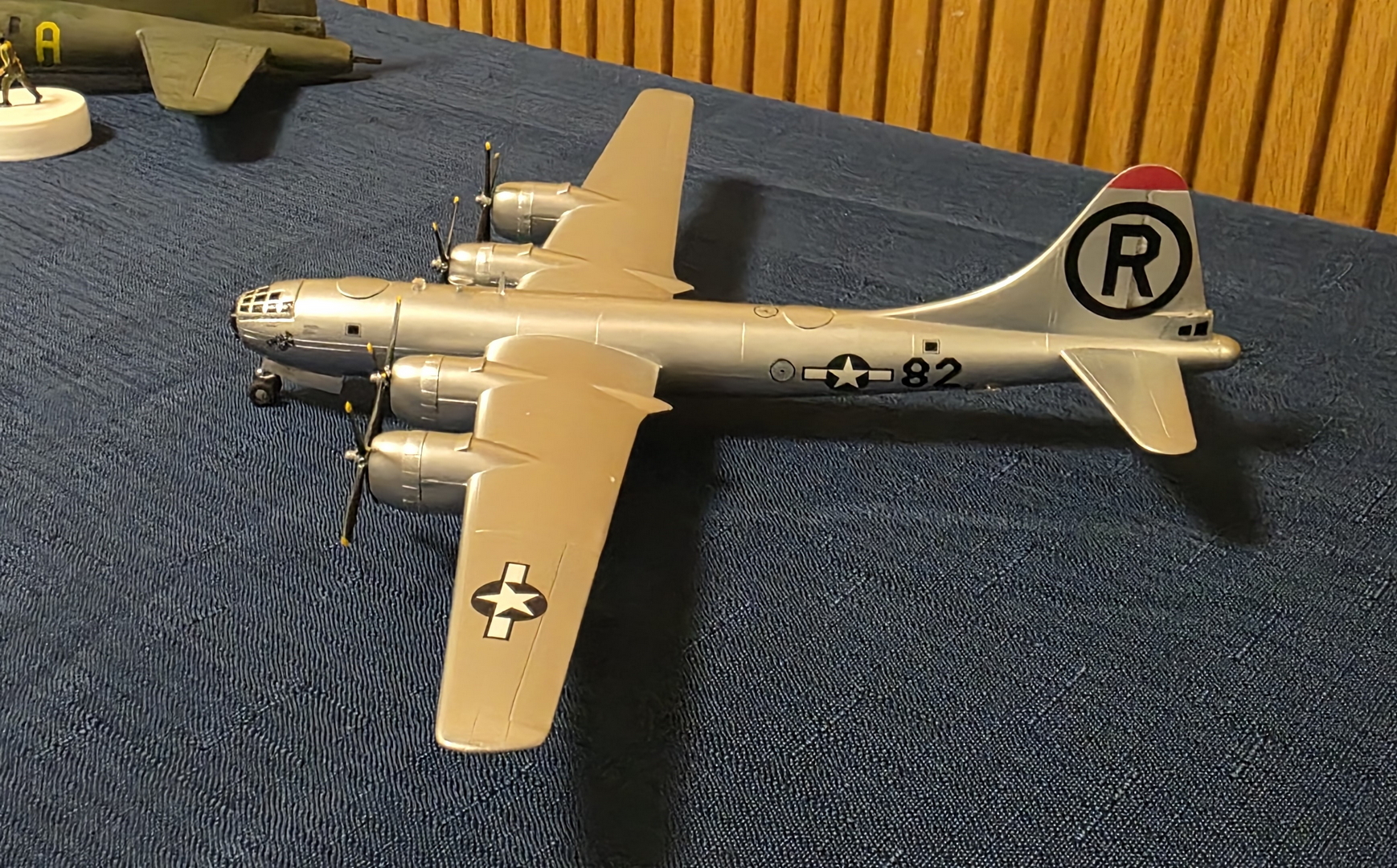
The B-29 model is in the scheme of the “Enola Gay,” which dropped the “Little Boy” atomic bomb on Hiroshima on August 6th, 1945, and was built by Mike Blohm. This is the Minicraft kit, which had to be modified into the “Silverplate” configuration to accurately depict an atomic bomb-capable B-29. Kirtland Field served as a B-29 base in support of the incendiary bombing raids on Japan. In March 1945, Kirtland Field was converted into a Superfortress base in a matter of only 45 days. The Enola Gay was stationed at Roswell Army Air Field, NM after WW II and is now on display at the Steven F. Udvar-Hazy Center, an annex of the National Air and Space Museum located in Chantilly, Virginia. B-29s and B‑50s were later stationed at Kirtland AFB as part of the 4925th Test Group Atomic to test nuclear weapons. One of those B-29s is on display at the National Museum of Nuclear Science & History (formerly the National Atomic Museum) here in Albuquerque. The display’s B-29 model was referred to during the symposium’s session on the April 11, 1950 B-29 crash in the Manzanita Foothills, as that aircraft was a Silverplate B-29.
Mr. Foster thanked ASM for supporting the symposium, and stated that he will likely do another next year. ASM should plan to be there again. Anybody have a 1/72 B-18 they would like to build for next year?
Wikipedia has a good history of Kirtland AFB with more details than I could provide in this short article. Check it out at: